Explain the topic
Give a brief outline of whether your enquiry concerns children, finances or separation. Ask what information is needed for the initial assessment.
Begin with an enquiry about a Mediation Information and Assessment Meeting, discuss the questions on your mind and understand what an initial conversation could involve.
Take the first step at a pace you can discuss.
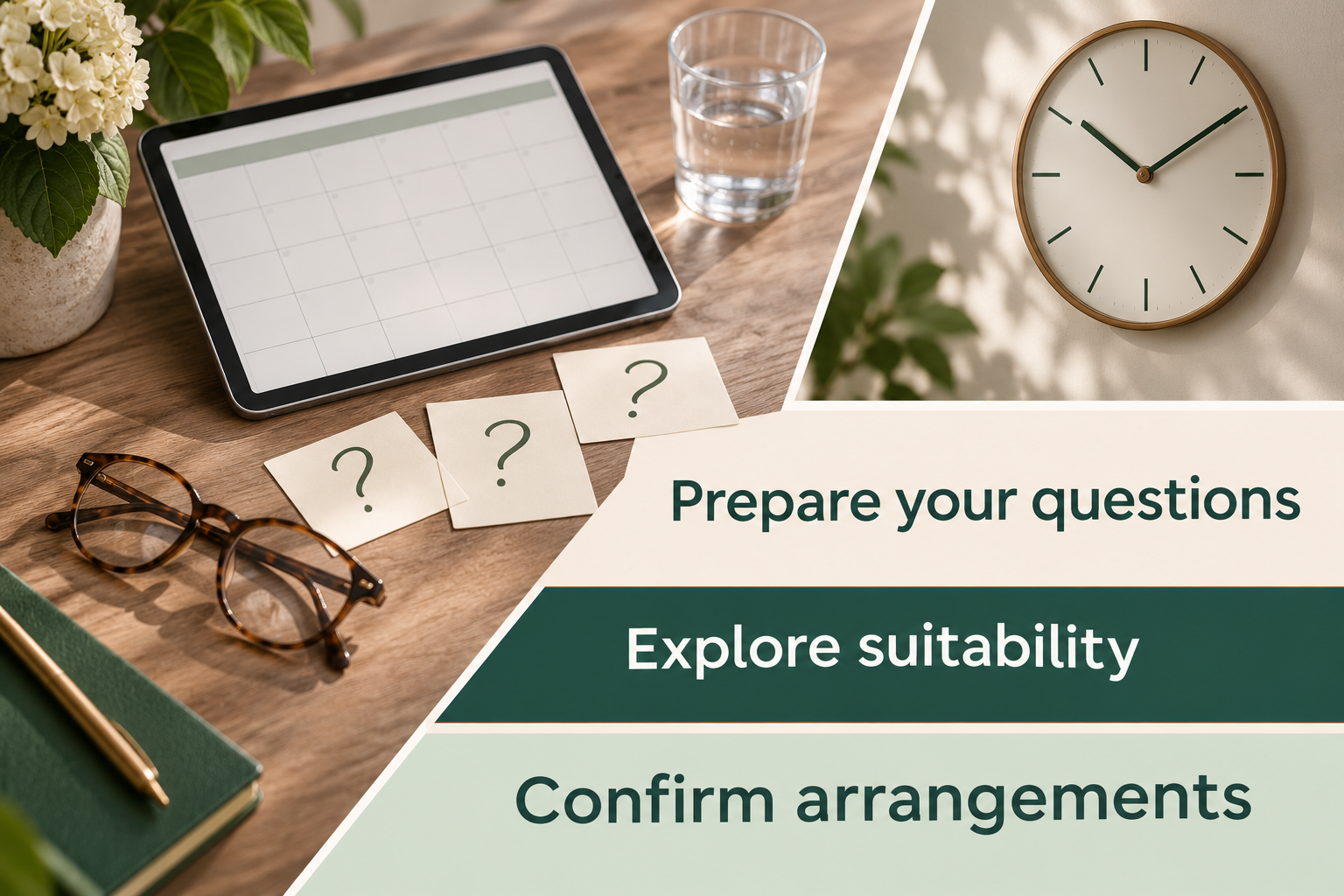

A MIAM is an initial information and assessment meeting. It gives you a chance to discuss your situation individually, understand how mediation works and consider whether it is suitable.
It is different from a joint mediation session. Attending an assessment does not mean you have reached an agreement or that further mediation will necessarily take place.
EH Mediation’s published MIAM information describes online assessments. Confirm the format and practical requirements directly when arranging your meeting.
Give a brief outline of whether your enquiry concerns children, finances or separation. Ask what information is needed for the initial assessment.
Ask about the meeting format, current fees, availability and access needs. Raise concerns about privacy or communicating with the other person before agreeing arrangements.
Agree the appointment details directly. Ask how the meeting will be confirmed and what instructions you should follow. Do not assume a time has been reserved by visiting this page.

You may find it helpful to write down the main issues you want to understand. Questions could cover what happens during an assessment, how confidentiality works, whether separate meetings are possible and how the mediator considers suitability.
Ask whether any documents are needed before sending them. This website has no document upload or enquiry form. Avoid sharing detailed family or financial records through an unverified channel.
Mediation is not suitable for every situation. Concerns about safety, pressure or an inability to take part freely need to be discussed individually. A shuttle or online format does not remove the need to assess suitability.
In England and Wales, a MIAM is normally required before certain family court applications, with exemptions. Your circumstances and the application matter; do not assume that everyone must mediate. See the GOV.UK mediation guidance and seek advice relevant to your situation.
No. Use the telephone link to enquire, then confirm the appointment details directly with EH Mediation.
No. Ask for the current fee and any funding or eligibility information relevant to you before agreeing to an appointment.
Visit our Services page for an overview, or contact the team to ask about your starting point.
The website provides information and a telephone route for enquiries; it does not have a booking calendar, take payment or confirm an appointment. Begin by asking whether an initial assessment is available and explain briefly what kind of issue you want to understand. You do not need to negotiate an outcome during this first contact. The team can explain what information it needs in order to discuss the next step.
If a meeting is proposed, confirm the date and time, format, fee and any payment arrangements directly. Ask how the appointment will be confirmed and what to do if you need to change it. Do not assume a time is reserved until the service has confirmed it with you.
A MIAM—Mediation Information and Assessment Meeting—is an initial meeting to discuss the mediation process and consider whether it may be suitable in your circumstances. It is distinct from a joint mediation session. You can ask what participation involves, what subjects might be discussed, what the mediator’s role is and what possible next steps could be. An assessment does not require you to agree to further mediation and does not guarantee that it will take place.
Suitability is not decided by this general webpage. The mediator needs to consider the individual situation, including whether each person can take part freely and whether the proposed format is appropriate. If there are concerns about safety, pressure, communication or significant power differences, raise them privately before any joint meeting is arranged. Online or shuttle arrangements do not automatically make mediation suitable.
You may find it useful to write down the main questions you want answered. These might include how an assessment differs from mediation, what topics can be discussed, how confidentiality and its limits are explained, what formats may be available and what fees currently apply. A short list can help you remember what matters without requiring you to prepare a complete case or decide what outcome you want.
Ask before sending documents or detailed personal information. This website has no upload facility, and it does not say which records are needed for an assessment. If information is requested, ask why it is needed, how to provide it safely and who will be able to see it. Do not send sensitive financial records, identity information or details about children through an unverified channel.
EH Mediation describes online assessments and shuttle mediation. Confirm what is currently offered, whether it is suitable for your circumstances and what practical arrangements apply. For an online meeting, ask about the platform, device and connection requirements, privacy in the place you will join from and what happens if technology fails. For shuttle mediation, ask how separate communication works and whether there are any additional practical considerations.
Tell the service about access, language or communication needs before agreeing a meeting. Ask what adjustments can be considered and whether they can be arranged. Do not assume that a particular adjustment, interpreter or meeting format is available until it has been confirmed.
This page does not publish a fee, payment schedule, appointment availability or funding eligibility. Ask for current information before deciding to proceed, including what a quoted fee covers and what happens if an appointment needs to change. If any point is unclear, request an explanation rather than relying on an assumption.
Mediation supports discussion; it does not replace independent legal or financial advice. A mediator does not decide the outcome for you. If a proposal may affect property, pensions, finances or legal rights, consider obtaining advice from an appropriately qualified adviser before making a decision. A discussion or proposed arrangement should not be assumed to have the effect of a court order.
In England and Wales, attendance at a MIAM is normally required before certain family court applications, subject to exemptions and the details of the application. This does not mean that every person must mediate or that mediation is appropriate in every case. The rules and exemptions depend on the circumstances. Check the current GOV.UK mediation guidance and obtain legal advice if you are unsure how the requirements apply to you.
Asking about an assessment does not itself meet a court requirement; confirm what evidence or steps are needed for your particular application. Do not delay urgent legal advice while waiting for an enquiry to be answered.
Make sure you know whether the proposed meeting is an individual assessment or a joint session, how to attend, what it will cost and how to contact the service if arrangements change. Ask any outstanding questions about privacy, suitability or the next step. You remain free to consider the information before deciding whether to continue.
To enquire, call 03300 100 346. You can also read the services overview or contact page. A call or website visit is an enquiry only; appointment arrangements must be confirmed directly with EH Mediation.
Ask about your options before deciding what comes next.
A Mediation Information and Assessment Meeting, commonly called a MIAM, is intended to give you information about mediation and allow consideration of whether it might be suitable. It is not the same as a joint session where participants discuss proposals together. The meeting is not a promise that mediation will follow, that the other person will attend or that an agreement will be achieved.
You can use the assessment to ask how mediation works, what the mediator does, what subjects may be within scope and what other forms of support might be relevant. You can ask what information is needed to consider suitability and how privacy and confidentiality are addressed. The answers should be confirmed directly by the service because this page does not set out a complete procedure or terms of service.
It is fine to arrive with questions rather than a prepared solution. If you have not decided whether mediation is right for you, explain that. An assessment is an opportunity to understand the option; it should not be treated as a commitment to accept a proposal or continue to further meetings.
Before an assessment, you may find it useful to identify the main subjects you are trying to resolve. These could relate to parenting arrangements, finances, communication after separation or uncertainty about what mediation involves. You do not need to prepare a complete chronology or persuade the mediator that your account is correct. A brief outline can help you explain why you are making contact and what you hope to understand.
Consider which questions are immediate and which require more information. For example, you might need to know whether a meeting format is available, how fees are calculated or whether you should obtain independent advice before considering a financial proposal. Write down any terms or processes you want explained in plain language. Ask the mediator to clarify anything you do not understand.
Do not assume that documents are required. The website does not specify what records an assessment needs. Before sending documents, ask whether they are necessary, what they will be used for, who will receive them and how to provide them securely. Avoid sending detailed financial information, identity documents or children’s records through an unverified channel.
Whether mediation is appropriate depends on individual circumstances. The assessment may consider whether each participant can understand the process, communicate their views and make choices freely. If you feel pressured to attend, fear consequences for speaking openly, are worried about contact or believe there is a safety concern, raise it privately before any joint meeting is arranged.
You can ask how the service considers safety and suitability, what would happen if a concern arises later and whether you can request a pause. Do not assume that you need to disclose sensitive information in front of the other participant. Ask how to raise a concern safely and who will be able to hear it. This webpage cannot carry out a risk assessment or determine whether a specific case is suitable.
Online and shuttle formats may alter how participants communicate, but they do not automatically make mediation appropriate. The mediator needs to consider the particular situation and the available arrangements. If mediation is not suitable, ask what other types of support or advice you may wish to explore. If there is immediate danger, contact the appropriate emergency service rather than waiting for an assessment.
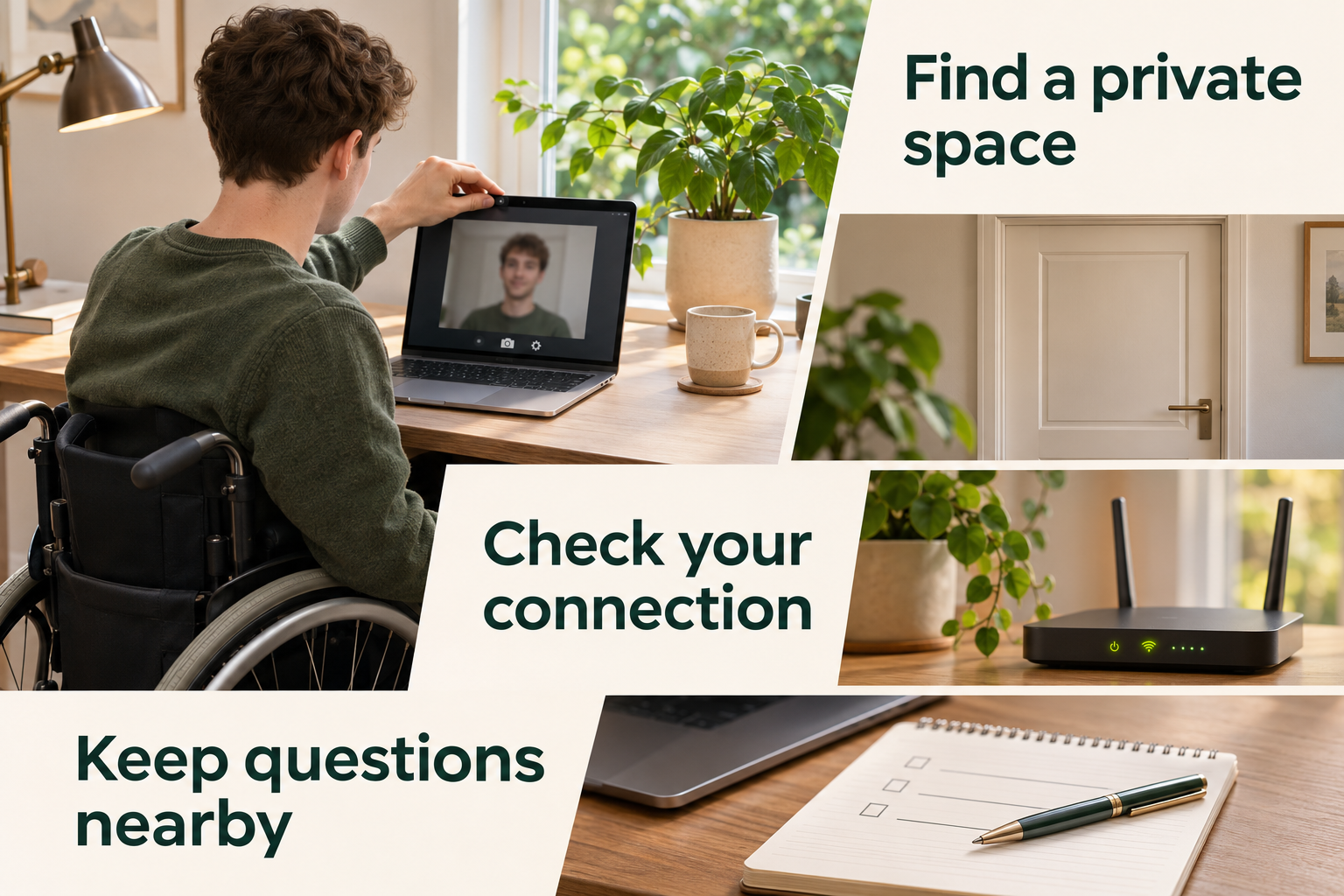
EH Mediation’s published information describes online assessments. Confirm directly whether an online appointment is currently available for you and what technology is required. Ask which platform is used, how an invitation is provided, whether you need to install software and what to do if you cannot connect. Do not assume that the service can resolve every device or connectivity issue.
Think about whether you can join from a place where you can speak privately and without interruption. If you share a home, device or account with another person, consider whether notifications, messages or saved meeting details could be visible to them. Ask the service what privacy arrangements it recommends and how to handle a connection problem. The website does not describe the platform’s data practices or make promises about the security of an individual device or network.
If a video meeting is difficult because of access, sensory, language or communication needs, mention this before the appointment is confirmed. Ask what adjustments can be considered and whether another format may be available. Confirm any agreed adjustment directly rather than relying on an assumption.
Shuttle mediation is a format in which participants communicate separately through the mediator rather than meeting together in one conversation. If this option is being considered, ask how the mediator conveys proposals, checks that each person has understood a message and manages questions that need clarification. Confirm whether the format is available and appropriate in your circumstances.
Separate communication can help address some practical preferences, but it does not itself establish that mediation is suitable or safe. The mediator still needs to consider whether both participants can take part freely and understand the process. Tell the service about concerns or practical requirements before arrangements are made, and ask what alternatives exist if your needs cannot be met.
This website does not publish current fees, payment instructions, appointment availability, cancellation terms or funding eligibility. Ask for the current details before agreeing to a meeting. If a fee is quoted, check what it covers, when payment is due and whether any other charges may apply. Ask what happens if either person needs to rearrange or cannot attend.
Confirm the appointment date, time, meeting format and how to join directly with EH Mediation. Ask how you will receive confirmation and whom to contact if the details change. A telephone call, click on a booking-related link or visit to this page is not itself a confirmed appointment. This site does not take payment or reserve a time.
If there is a deadline connected with a court application or another legal process, get independent legal advice about that deadline. Do not assume that contacting a mediator satisfies a court requirement, extends a time limit or pauses proceedings.

The next step depends on the information discussed and the assessment of suitability. Further mediation may be considered, another format may be discussed, more information may be needed or mediation may not be appropriate. There is no guarantee of a particular outcome, a fixed number of meetings or a standard timetable on this website.
If further sessions are proposed, make sure you understand the arrangements, fees, roles and any relevant terms before deciding. Ask what will happen if one participant is not ready to continue or if new concerns arise. You can take time to consider what you have learned and seek independent advice where needed.
If an agreement or written summary is discussed, check that it accurately records your understanding and ask what status it has. Do not assume that a proposal is legally binding or has the effect of a court order. A solicitor or other appropriately qualified adviser can explain what additional steps may be relevant to your circumstances.
In England and Wales, a MIAM is normally required before certain family court applications, but exemptions apply and the requirement depends on the type of application and the circumstances. This does not mean that every person must mediate or that mediation is suitable in every case. The details can change, so consult the current GOV.UK mediation guidance and obtain independent legal advice if you are unsure.
Ask what documentation or evidence is required for your particular application and whether an exemption may apply. An initial enquiry or assessment should not be assumed to complete a court requirement. If a deadline is approaching, seek advice promptly rather than waiting for a meeting to be arranged.
An assessment gives you space to ask questions; it does not mean you have agreed to mediate. You can ask for more time to think, seek advice or clarify what a proposal would involve. If you feel unable to speak openly or believe you are being pressured, tell the mediator privately before any joint session is considered. You should not be expected to agree to a decision simply because a meeting has taken place.
It is also reasonable to ask what happens if one person wishes to pause or stop. The answer depends on the service’s process and any relevant court requirements; ask EH Mediation and, where needed, an independent legal adviser. This page cannot determine the legal effect of an individual’s choice or whether an exemption to a court requirement applies.
Before sharing sensitive details, ask the mediator to explain what confidentiality means in the service, how information is recorded and what limits may apply. Do not assume that a conversation is confidential in every circumstance or that information can never be shared. The exact arrangements should be confirmed directly before you provide information that you consider private.
If you are participating online, consider whether others can hear you or see your screen, notifications or meeting information. Ask what steps the service recommends and whether there is a way to raise a sensitive concern separately. The security of a device, home network or shared account is not established by this webpage.
When an assessment ends, you may have learned more about the process without having reached a decision about what to do. You can reflect on whether you understood the mediator’s role, whether the proposed format feels workable, what information remains missing and whether independent advice would help. If something was unclear, ask the service to explain it before deciding.
If further mediation is proposed, check the practical arrangements again, including fees, timing, format and what preparation is expected. Confirm what happens if circumstances change or someone cannot attend. A proposed next step should not be treated as agreed until you have understood it and confirmed the arrangements directly.
Some participants may decide to continue; others may need to obtain advice, consider another route or not proceed. This guide does not promise that any particular option will be available. The appropriate decision depends on your circumstances and the information you receive from the service and any independent adviser you consult.
For your own reference, you may wish to note the appointment details, fee information, meeting format and any agreed practical arrangements. If the service provides written confirmation, check that it matches what you understood. Ask for correction if an important detail is missing or incorrect. A personal note is not a substitute for formal service terms or independent advice about an agreement.
Do not record or share another person’s information without considering privacy, safety and any applicable rules. Ask the mediator what can be recorded or circulated as part of the service and how notes or summaries are handled. The website itself does not specify the record-keeping practice for mediation meetings.
You do not have to resolve every question during an initial assessment. If a subject feels difficult, you can ask for it to be explained another way, request a pause or say that you need time to consider what you have heard. If you are uncomfortable raising a concern in front of another person, ask how to speak to the mediator separately and safely.
Some participants need accessible information, interpretation, a quieter setting or help using online technology. Raise these needs as early as you can and ask what the service is able to arrange. Do not assume that a particular adjustment is available until it has been confirmed. If an adjustment cannot be provided, you may need to consider whether another route is more appropriate for you.
If a proposal is discussed, take time to understand its practical meaning and any assumptions it depends on. You can ask what information is missing and whether independent legal or financial advice would be helpful. A mediator does not decide whether a proposal is fair or tell you to accept it. You remain responsible for deciding whether you understand the choices available to you.
If a note or summary is prepared, read it carefully and ask for corrections or clarification if it does not reflect your understanding. Confirm what the document is intended to record and what status it has. Do not assume that a written summary is legally binding or changes an existing court order. Ask an appropriately qualified adviser about any formal steps that may be needed.
You can make an enquiry without committing to continue. If you need time to think, ask whether and how you can follow up, and confirm any contact method that is safe and suitable. If your circumstances change, explain what is different before arranging a meeting so that the service can consider the updated information.
Where court proceedings or a legal time limit are involved, keep track of those dates independently and seek legal advice. A telephone enquiry, planned assessment or discussion about mediation does not itself pause proceedings or extend a deadline. Use official guidance and qualified advice for questions about requirements that apply to your application.